

Unlocking Operational Impact Through AWE’s UAS Strategy
Introduction
The Atomic Weapons Establishment (AWE) is responsible for supporting the UK’s nuclear deterrent programme, operating across some of the most complex and high-security environments in the country. As technological innovation accelerates, AWE faces a dual challenge: meeting its mission to deliver safely, securely and efficiently, while strengthening resilience and reducing risk.
Recognising the increasing role of robotics and autonomy across critical infrastructure, AWE set out to define a strategic pathway for how Uncrewed Aircraft Systems (UAS) could transform its operations over the next five years.

The Challenge
AWE had already deployed world-leading UAS capabilities across parts of its estate, demonstrating early value in inspection and situational awareness. Yet these successes had reached a limit.
With high internal demand and limited capacity, the organisation risked plateauing, unable to scale innovation at the pace required. Across fifteen departments, leaders shared the same view: drones were delivering real benefits, and there was clear potential to build on this success through a more strategic approach.
AWE needed a clear roadmap to move from isolated trials to a coordinated, organisation-wide capability. The cost of not doing so was significant. Without a defined strategy, the organisation faced unrealised savings of thousands per day, equating to millions of lost potential over five years.
The Solution
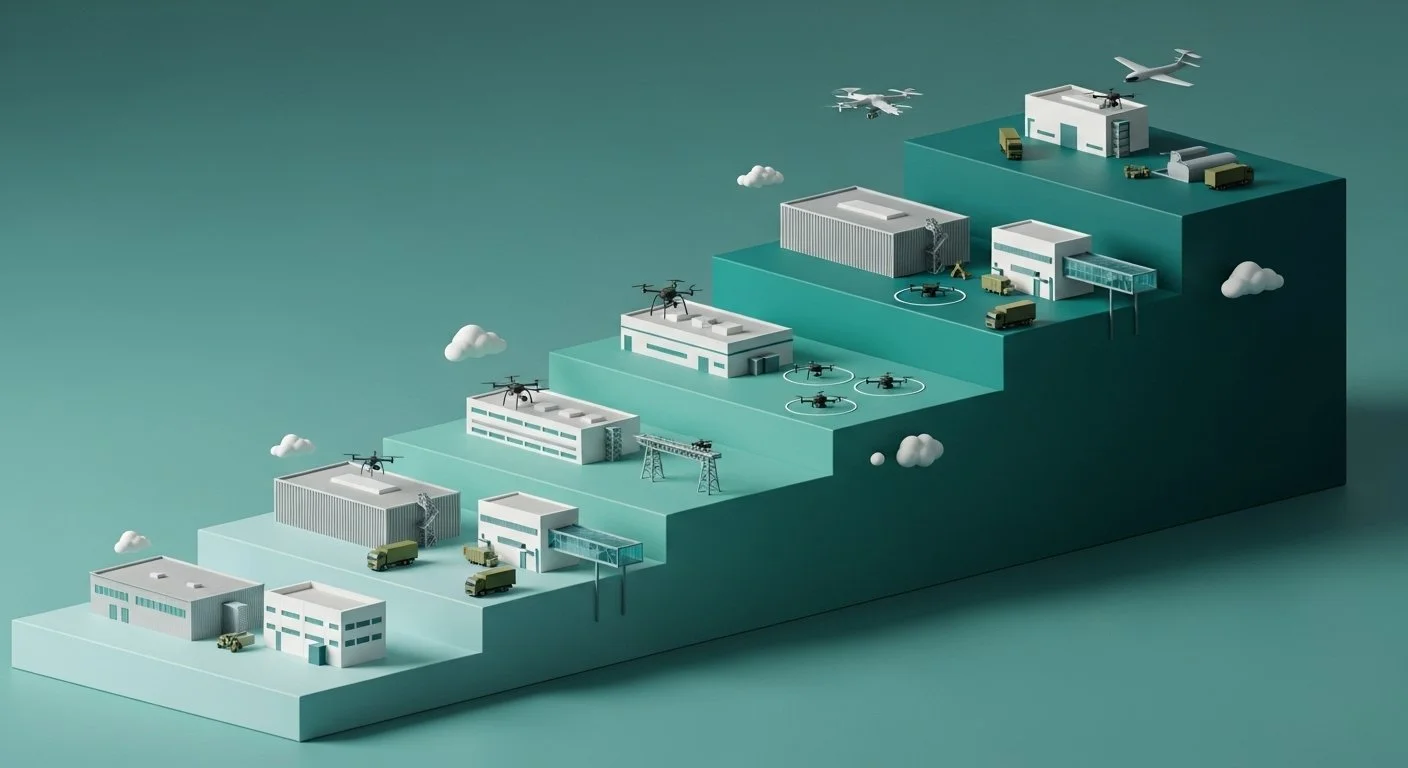
Ajuno worked with AWE to develop a five-year UAV (Unmanned Aerial Vehicle) Pathway - a structured, mission-aligned roadmap detailing where AWE’s drone operations are today, where they need to be, and how to get there.
Through interviews and workshops with fifteen business areas, Ajuno mapped existing use cases, capability gaps and future opportunities. The resulting plan set out a clear sequence of actions and investments to scale operations safely and effectively.
Key features of the roadmap include:
A stepwise transformation from localised inspection to integrated, autonomous operations.
Deployment of priority use cases within twelve to eighteen months, including confined-space inspections, BVLOS emergency response and automated patrols.
Integration with AI-ready systems to enable digital twins, predictive maintenance and continuous monitoring.
A recommended hybrid delivery model balancing internal ownership with external expertise for faster, lower-risk implementation.
This structured approach provides not just a vision, but a practical delivery framework to achieve it.
The Impact
The UAS Pathway has given AWE a clear route to a future-ready, resilient and data-driven operating model. It has quantified the benefits of investment, paving the way for scale-up while directly supporting AWE’s mission to protect people, assets and the environment.
Projected outcomes* include:
£69.7 million in savings over five years, representing a 23 times return on investment.
3,200 high-risk hours removed annually, through remote and autonomous operations.
840 operational days saved each year, accelerating delivery across critical programmes.
Incident detection within one minute, enhancing security and emergency response.
By aligning technology, people and process, AWE is now positioned to lead UK critical infrastructure in safe, intelligent and autonomous operations, turning drones from isolated tools into strategic enablers of mission success.
*Initial estimates. Will undergo further validation and refinement with AWE teams.
Interested in how a structured, evidence-based UAS roadmap can accelerate safer, smarter technology adoption across your organisation?

How should I be using drone solutions?

What are the best available systems for me?
